


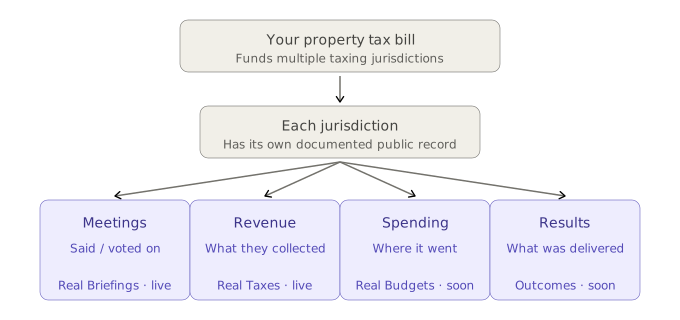
Each taxing jurisdiction or taxing decision starts with what is SAID/PROMISED/VOTED.
We show you what is COLLECTED, SPENT, and most importantly the RESULTS.
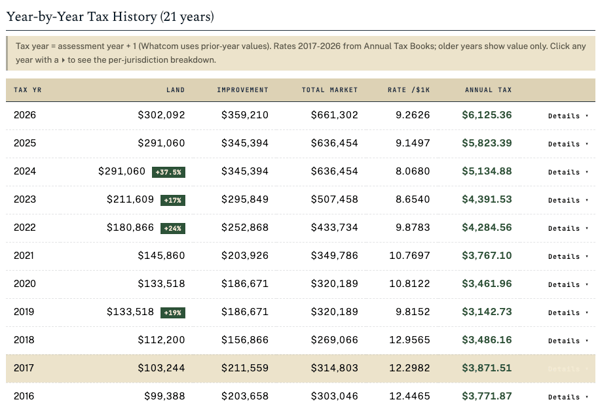
Twenty years of tax history
Every annual property tax statement gives you one number. Real Record gives you twenty years of them — assessed value, total tax, and rate per $1,000 for every year on record. The cumulative picture tells you what one statement can't: how much your property has actually paid into the system, and how fast that number has grown.
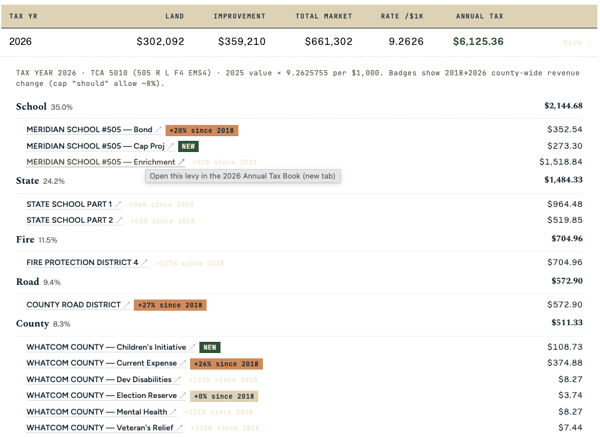
Per-jurisdiction breakdown
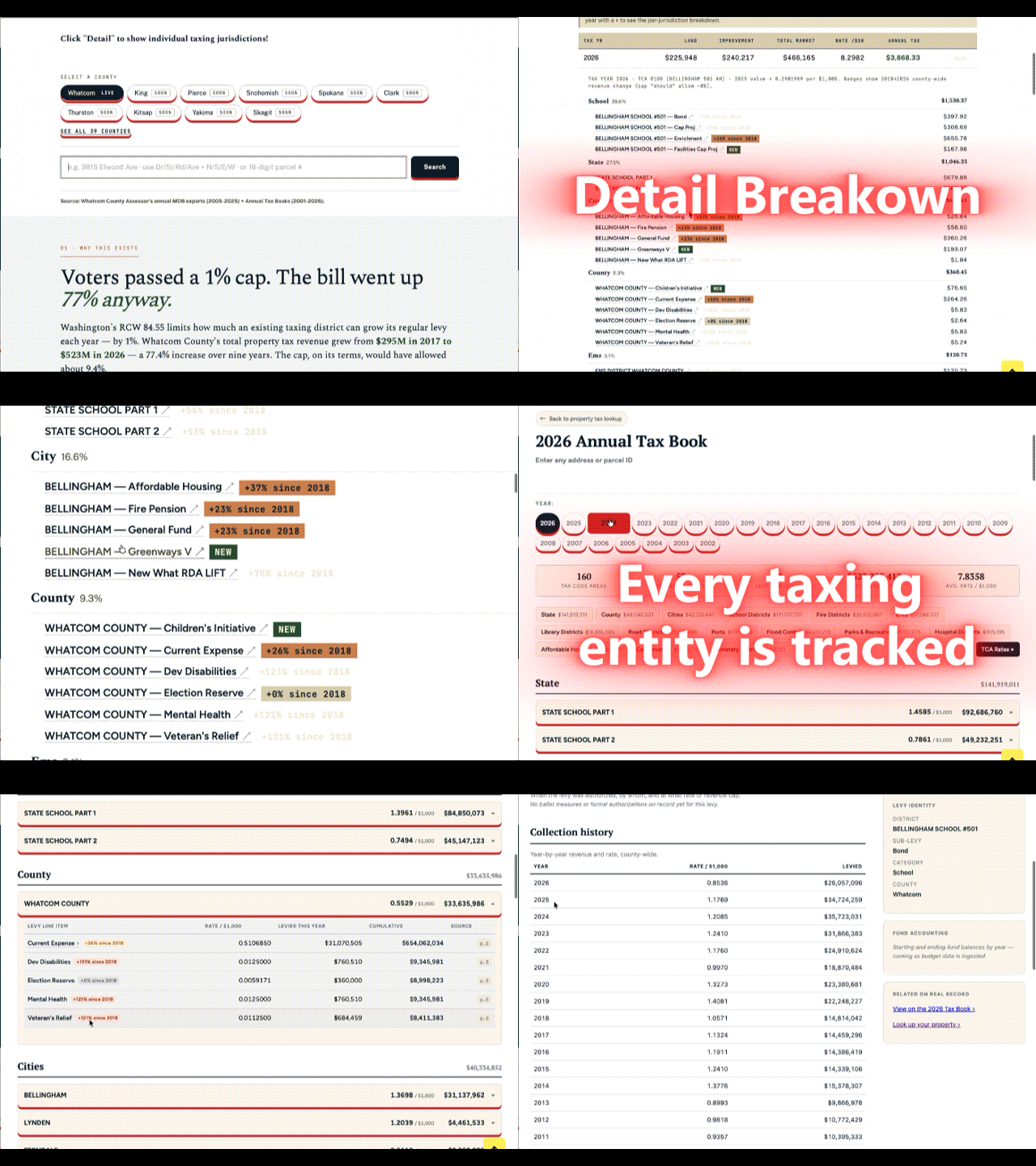
Your tax bill funds 8 to 14 different taxing jurisdictions — county, city, schools, fire district, EMS, library, port, and more. Real Record breaks every dollar out by jurisdiction and shows how each one has grown since 2018. Some doubled. Some held steady. The +X% chips next to each line item flag the ones routing around the 1% cap with new levies and lid lifts.
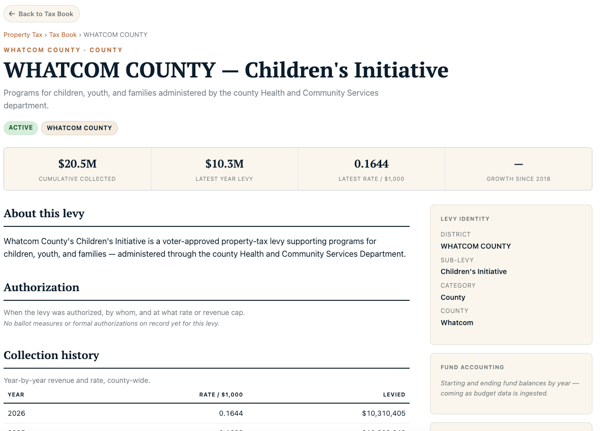
Fund / levy page
Every levy on your bill has a story. Children's Initiative. Greenways. Affordable Housing. School bonds. Fire district operations. Each one was put on a ballot, approved at a meeting, and connected to a fund. Real Record links every line item to the original authorization, the year-over-year revenue, and the meetings where it was discussed. You voted for these. Now you can see what happened.
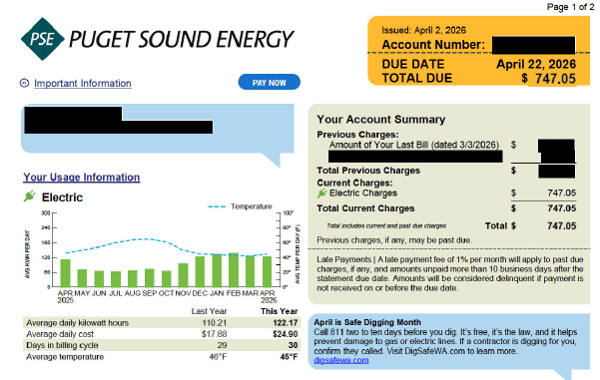
It does. Here's the math.
When a landlord's property tax goes up, that cost doesn't stay with the landlord. It gets passed through — sometimes at the next renewal, sometimes folded into a market-wide rent bump, sometimes deferred until a sale forces a new owner to underwrite the higher carrying cost. The route varies. The destination is the same: tenants pay it.
Many Whatcom County property owners — including the editor of this site — have seen tax bills rise more than 30% in the last three to four years. On a duplex or fourplex, that's hundreds of dollars per month, per unit, in new operating cost. None of it shows up as a line item on your rent. All of it shows up in your rent.
The 1% cap was supposed to keep this from happening. It didn't, because new levies, lid lifts, and special districts sit outside the cap — and each one was approved at a ballot or a meeting. Renters turn out to vote at lower rates than homeowners. Renters also rent inside the jurisdictions where those levies passed. Both things are true at once.
If you want to know whether your rent has a property-tax problem inside it, look up the building you live in. The owner's tax history is public. So is the meeting where each levy was approved.